
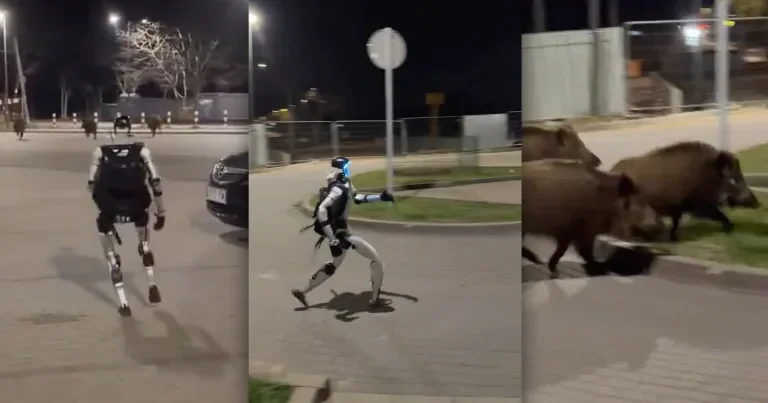
In a striking and somewhat surreal scenario that seems ripped from the pages of a science fiction novel, a humanoid robot has been filmed pursuing a pack of wild boars. This astonishing footage, which has gone viral, is reminiscent of the themes from popular video games like “Horizon Zero Dawn,” but presents a reversal of the traditional predator-prey dynamic, highlighting the advancements in robotics and their potential implications on wildlife.
The video, shared widely across social media platforms, features a humanoid robot outfitted with impressive mobility capabilities as it navigates through the rugged terrain in a bid to catch the wild boars. While some view this as a showcase of innovative technology at its finest, others are raising ethical concerns about the role of robots in natural ecosystems. Critics argue that the pursuit of wildlife by robotic entities could disrupt natural behaviors and ecosystems, leading to unforeseen consequences for animal populations.
The development of humanoid robots capable of navigating complex environments has progressed dramatically in recent years. Engineers and designers are focusing not only on mobility but also on artificial intelligence, which raises questions about how these machines will interact with wildlife. Could we be witnessing the beginning of a new era where technology not only assists humans but also engages with nature in profound ways?
The public’s response to the video has been mixed. While there is a segment of tech enthusiasts who are excited about the future of robotics, many wildlife advocates are voicing their worries. The fear is that such demonstrations could lead to a normalization of robotic interactions with wildlife, potentially leading to future instances of robotic hunting or stalking. The conversation around this topic is essential as we navigate the balance between technological advancements and environmental stewardship.
As we move forward, it is vital to consider the ethical implications of using humanoid robots in wildlife settings. While technology holds promise for conservation efforts, it is crucial to approach its deployment with caution. Instead of chasing wild animals, perhaps the role of humanoid robots could shift towards aiding conservationists in monitoring wildlife populations and habitats, promoting coexistence rather than competition.
As society grapples with these issues, ongoing dialogues will determine the path we take in merging technology with nature responsibly.