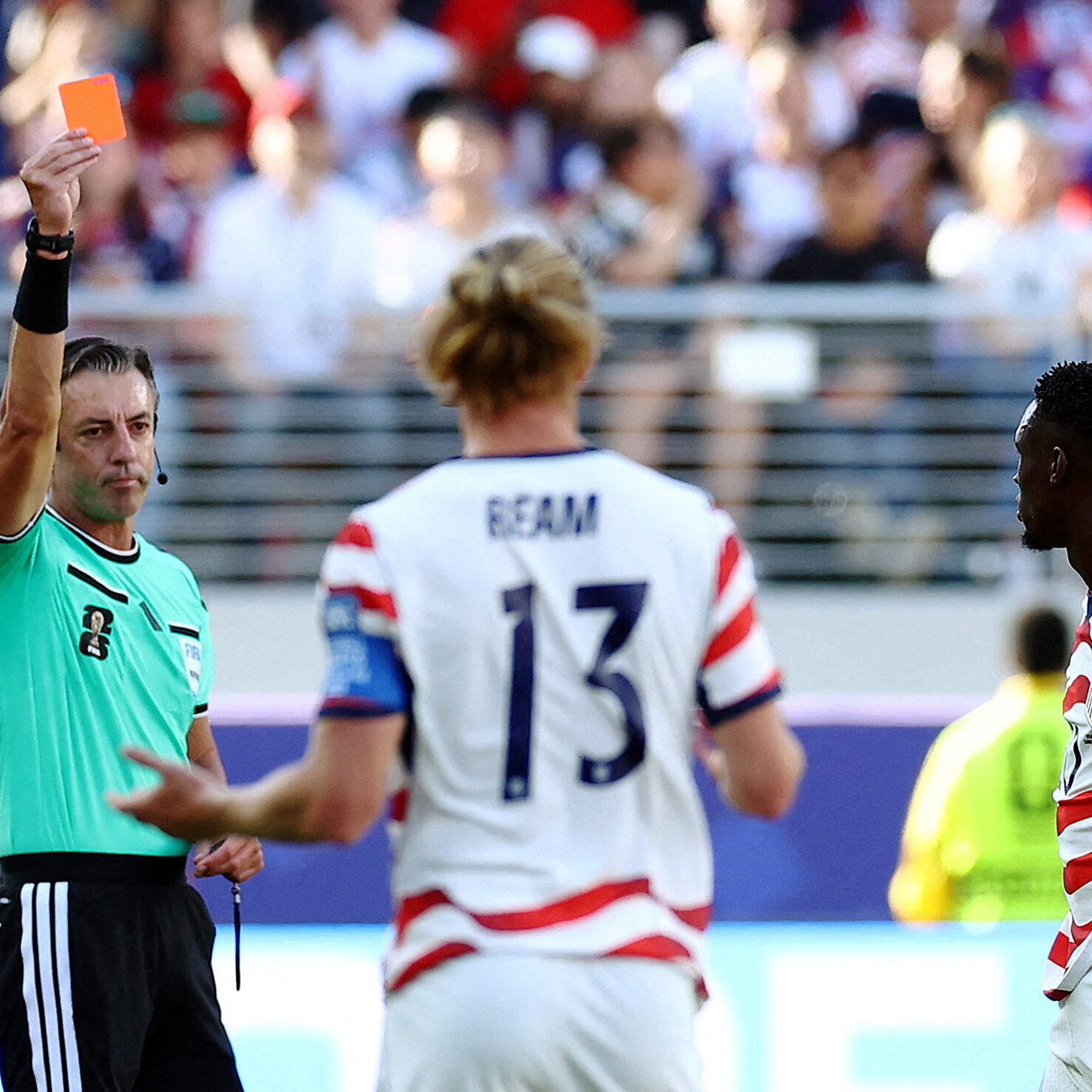
In a surprising turn of events, President Donald Trump’s decision to intervene in the World Cup suspension of Nigerian player Balogun has ignited backlash across Europe. Balogun was handed a one-game ban due to an incident during a qualifying match, a punishment seen as standard sports governance. However, Trump’s insistence on overturning this suspension reflects a broader tactic of American diplomatic assertiveness that has raised eyebrows among European leaders already frustrated with U.S. foreign policy.
European football officials have expressed outrage at the intervention, suggesting it undermines the integrity of the game’s governing bodies. Many view this act not just as a violation of sportsmanship but as an extension of political meddling in what should be an apolitical arena. This sentiment is compounded by recent geopolitical tensions, as the U.S. and European nations navigate a complex landscape involving trade disputes, climate agreements, and military collaborations. The timing of Trump’s intervention could not be more fraught.
Critics argue that Trump’s penchant for using sports to demonstrate American power is emblematic of a larger strategy that often disregards international norms and established procedures. By prioritizing populist appeals over long-standing sports ethics, the president risks alienating not only European nations but also fans and athletes globally who cherish the neutrality of sport. Allies are left to grapple with the fallout of such a unilateral move, which many see as a troubling precedent.
The reaction from European football’s governing bodies has been swift and stern. Officials from UEFA and FIFA are now reconsidering the processes they employ in player discipline, hoping to preempt future interference and ensure their authority is maintained. There have been calls for stricter regulations and clearer communication channels that would minimize the chances of political meddling, reaffirming the principle that sports should remain a field apart from state influence.
As the geopolitical landscape shifts and tensions rise, the implications of Trump’s foray into football governance could have far-reaching consequences. It raises questions about the role of politics in sports, especially in a time when nationalism appears to be on the rise. For Black men and athletes like Balogun, who are already navigating the complexities of identity and representation, this incident amplifies the challenges they face in a world where sport and politics increasingly intersect.
#Trump #Balogun #WorldCup
Oliver J. Jackson is the founder of Wassupr.com and a Los Angeles-based creative director, program strategist, and entrepreneur with over 15 years of experience across 2K, Riot Games, Esquire TV, and NBCUniversal. Bringing an insider’s perspective to digital innovation, he covers a wide range of topics for Wassupr including entertainment, news, gaming, technology, business, creator culture, sports, health, and fashion.