
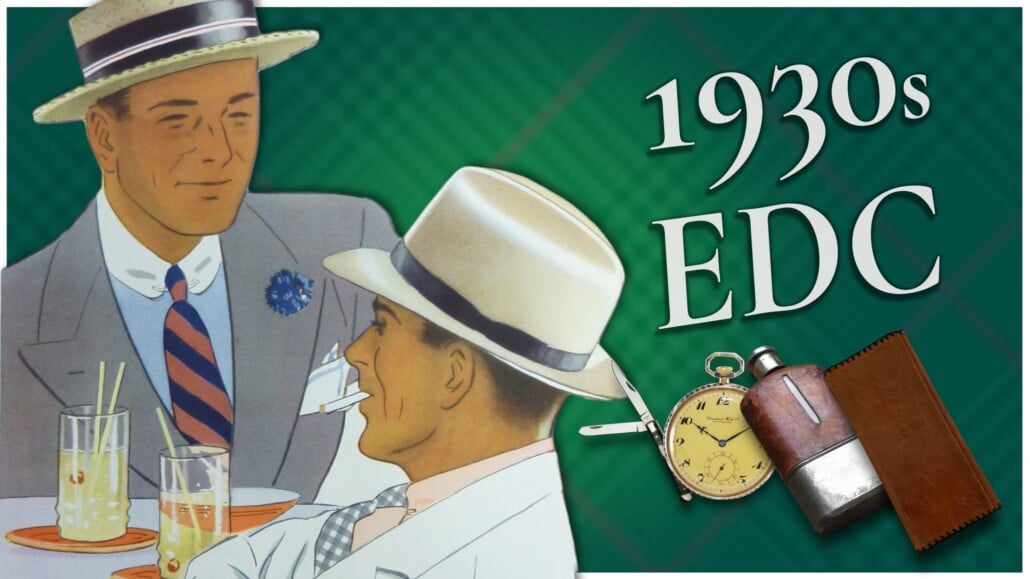
Perhaps no decade better exemplifies the ‘Golden Age of Menswear’ than the 1930s, when tailoring reached its zenith and personal style was a matter of daily discipline. Men in this era understood that clothing was not just about functionality; it was a reflection of their identity and status. Suits were impeccably tailored, with an emphasis on broad shoulders, narrow waists, and classic lapels, creating a silhouette that embodied masculinity and elegance. Yet, a true gentleman knew that his appearance encompassed more than just his suit; the accessories he carried played a crucial role in completing his look.
One of the most iconic items of the 1930s was the pocket square. A gentleman understood that this simple fold of fabric could add a pop of color and distinction to his ensemble. Whether in silk, linen, or cotton, the pocket square served as a canvas for personal expression, showcasing a man’s style and taste. Paired with a crisp dress shirt and tailored jacket, it transformed a standard outfit into a showcase of character and individuality, demonstrating that even the smallest details matter.
Another essential item was the classic fedora hat. This stylish accessory did more than just provide protection from the sun; it also communicated sophistication and confidence. Gentlemen often matched their fedoras with their suits, impeccably choosing colors and materials that complemented their overall look. The fedora became a staple of men’s fashion, symbolizing a provides a foundational element of style—protection, allure, and an air of mystery, reminding us how an accessory can redefine one’s persona.
In a time when smoking was considered glamorous, the cigarette case emerged as a significant accessory. Made from elegant materials like silver or brushed leather, these cases allowed gentlemen to carry their tobacco in style while making a statement wherever they went. It was not unusual for a man to display his cigarette case during social gatherings, showcasing not only his taste in accessories but also his social status, as it represented a certain lifestyle of leisure and sophistication.
Lastly, a well-worn but stylish leather wallet was never out of reach. Beyond its practical function of carrying currency and identification, it represented a man’s organized approach to life. A gentleman’s wallet often bore the patina of time, suggesting that it had seen many meaningful dealings and moments. Carrying a well-maintained wallet hinted at personal responsibility and refinement, echoing the values of the 1930s and underscoring the idea that a gentleman’s attire was never truly complete without his carefully chosen essentials.