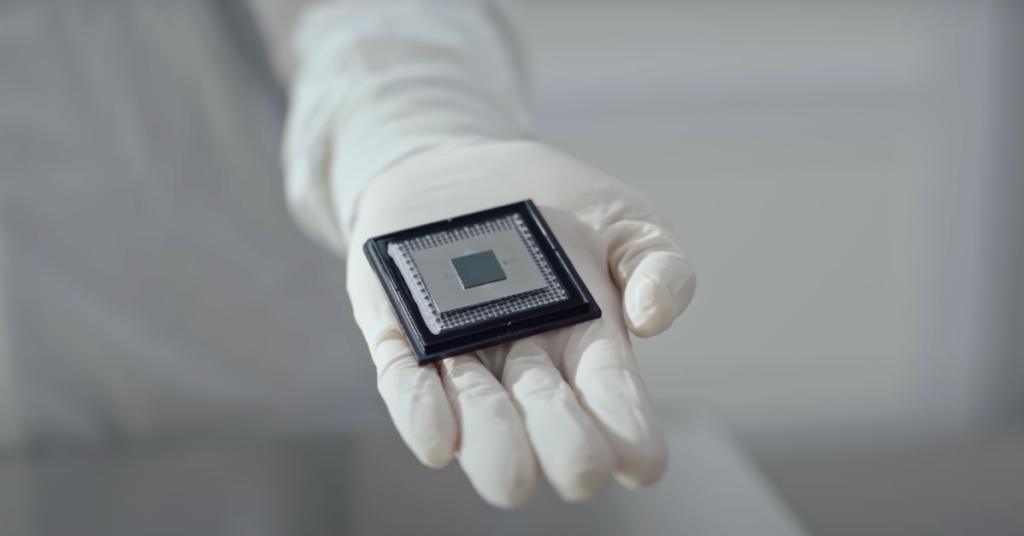
Google has unveiled a groundbreaking development in quantum computing with its new chip, Willow. Capable of performing calculations in under five minutes that would take traditional supercomputers 10 septillion years, Willow represents a quantum leap in computational speed.
One of the biggest challenges in quantum computing has been error rates, which have plagued the field for decades. Willow addresses this with revolutionary error-reduction techniques, a breakthrough that scientists have been chasing for over 30 years. This advancement not only makes quantum computing more reliable but also opens doors to solving problems previously deemed impossible.
In a twist that sounds like it’s straight out of science fiction, Hartmut Neven, manager of Google’s Quantum AI Lab, suggests that Willow might be leveraging parallel universes to achieve its unprecedented computational power.
This theory ties into the long-debated multiverse concept, championed by physicist David Deutsch, who argues that quantum interference patterns hint at the existence of alternate realities.
If true, this could be the first tangible evidence that we’re not alone in our universe—or even our reality.
The ripple effects of Willow’s capabilities extend far beyond quantum computing. Experts believe this breakthrough will revolutionize artificial intelligence by enabling the generation of massive datasets for training advanced AI models. This could lead to hybrid AI systems that are smarter, faster, and more adaptable than ever before.
Google’s quantum milestone raises profound questions about the nature of existence. Is Willow merely a technological marvel, or is it a window into a multiverse—a reality where countless versions of ourselves might exist?
While science has yet to confirm these theories, one thing is certain: we are standing on the brink of a new era in computing and perhaps even our understanding of reality.